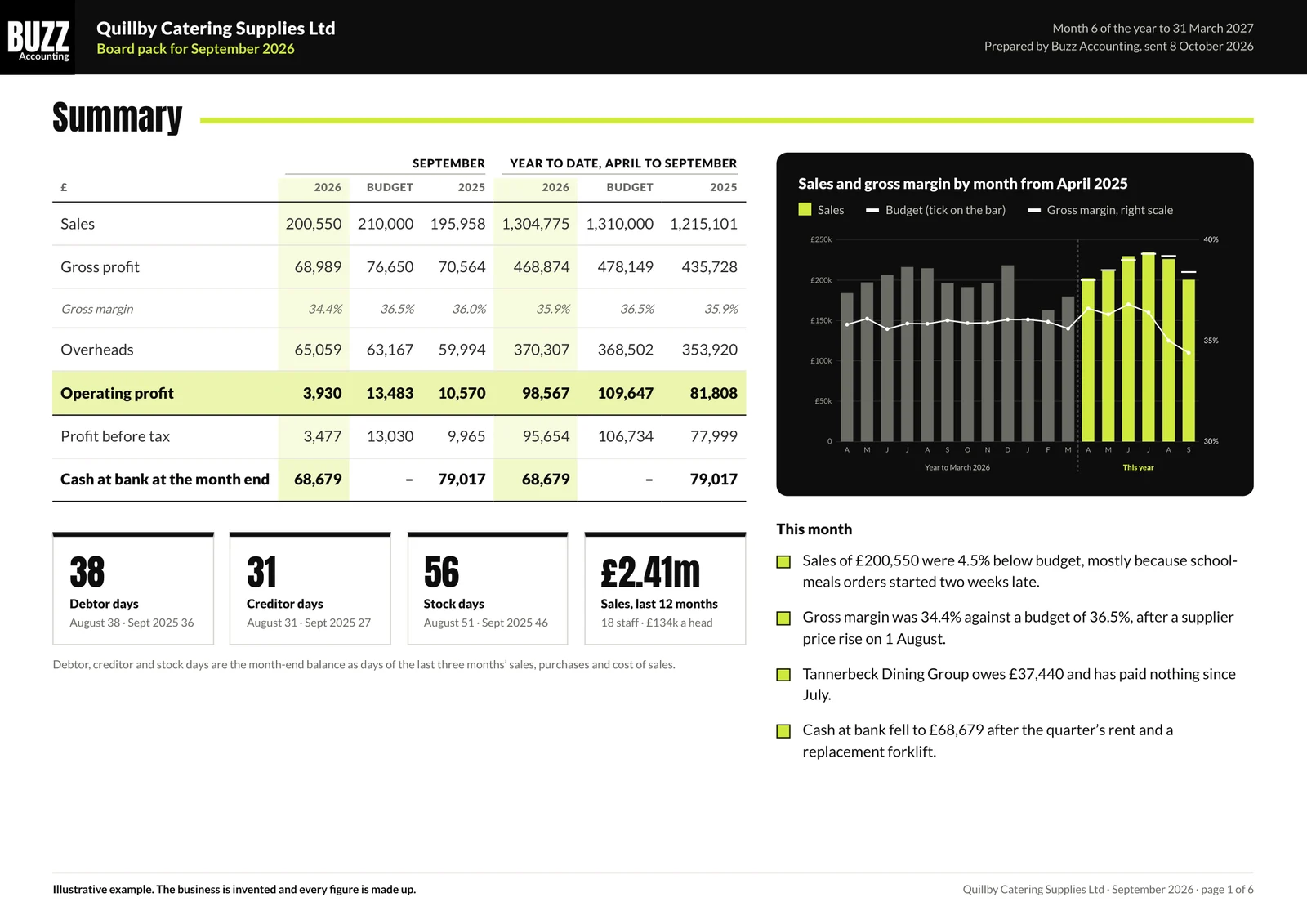
A key performance indicator, or KPI, is a number you check on the same day each month to see whether the business is on track. Pick five to eight and set each one against a budget.
Sales and enquiries
Sales for the month against the budget, and the number that leads to sales: enquiries, quotes sent, orders taken or bookings. Sales tell you how last month went. The leading number tells you what next month's sales are likely to be, while there is time to act on it.
Gross margin
Gross margin is sales less the direct costs of making them, as a percentage of sales. Direct costs are materials, stock, subcontractors and the wages of the people doing the paid work. Check it by product, service or customer as well as in total, because a total figure can hide a line of work that loses money.
Overheads against the budget
Rent, office wages, insurance, software, vehicles and finance costs, against what was budgeted for the month. Overheads change slowly, so the useful check is the year to date against the budget, and any single cost that has moved.
Cash and debtor days
The bank balance against the cash flow forecast, and debtor days: the amount customers owe divided by a day's sales. With 30-day payment terms, debtor days of 45 mean customers are paying two weeks late on average. The debtor days calculator works it out.
Break-even sales
The sales needed each month to cover the overheads: overheads divided by the gross margin percentage. With £12,500 of monthly overheads and a 45% margin, break-even is £27,778 of sales. Knowing the figure tells you part way through the month whether it will be a good one. The break-even calculator works it out for your figures.
Numbers for your sector
- Cafés, restaurants and pubs: food and drink costs as a share of sales, and wages as a share of sales, each week.
- Builders and trades: the margin on each job against its estimate, work in progress and retentions owed.
- Recruitment agencies: gross profit per placement, contractor margin and the number of contractors working.
- Shops and online sellers: stock turn, average order value and returns.
- Professional firms: chargeable hours, the hourly rate achieved and work done but not yet billed.
Using them
Put the same KPIs on one page every month, each next to its budget and last year's figure, and agree in advance what you will do when one moves. If debtor days pass 45, every invoice over 30 days gets a phone call that week. If gross margin on project work falls below the floor you set, the next quote is checked before it goes out.
With Business Pulse, your KPIs sit in Buzz OS next to the budget and the management accounts, and the review meeting goes through them every quarter or month.


Talk to us
Tell us about the business and which level you are looking at, or book a 30-minute call.
Book a callOr call
07476 989568Accreditations and partners